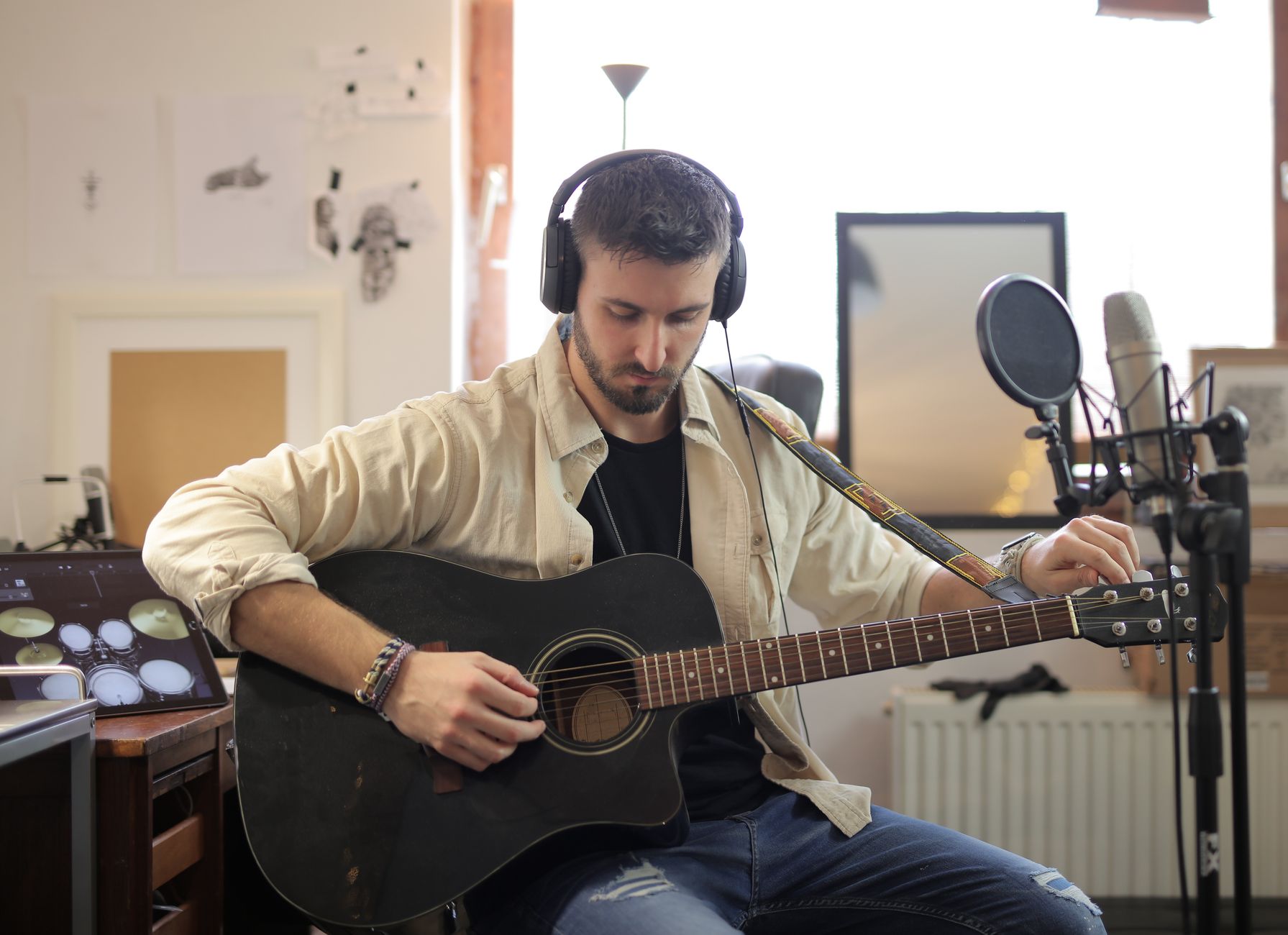
Search for "AI song generator" and you'll find dozens of tools promising complete tracks in seconds. Most deliver instrumental loops or generic melodies with forgettable lyrics. The problem isn't the technology—it's what these tools prioritize.
An AI song generator focuses on creating audio files. An AI songwriter focuses on lyrics, structure, rhyme schemes, and narrative. One gives you a beat with words on top. The other gives you a song people might actually remember.
The distinction matters because lyrics and structure are what separate a track from background noise. A free AI lyrics generator that understands songwriting fundamentals will outperform a full-production tool that treats words as an afterthought.
What an AI Song Generator Actually Does
Most AI song generators work like this: you input a prompt or select a genre, the system generates a melody or beat, then adds vocals with auto-generated lyrics. The output is a complete audio file you can download and use.
The appeal is obvious. You get a finished product without recording equipment, music theory knowledge, or vocal training. For background music, stock content, or quick demos, this works fine.
The limitation shows up when you listen closely. The lyrics rarely have a clear story or emotional arc. Rhyme schemes are predictable (AABB couplets, mostly). Verses don't build toward anything. Choruses repeat generic phrases that could apply to any song in that genre.
This happens because the generator optimizes for audio output, not lyric quality. The words exist to fill space between musical phrases. They're functional, not intentional.
What an AI Songwriter Prioritizes Instead
An AI songwriter—whether it's a dedicated lyric tool or a free rap lyrics generator—treats the writing as the core product. The system focuses on:
- Rhyme complexity: Internal rhymes, multisyllabic patterns, slant rhymes that add texture without sounding forced
- Song structure: Verse-chorus-bridge architecture that creates tension and release
- Narrative coherence: Each section advances an idea or emotion instead of repeating the same sentiment
- Syllable count and phrasing: Lines that fit natural speech patterns and melodic phrasing
A good AI songwriter gives you lyrics you'd want to perform or record with your own production. The words work independently of any specific beat or melody because they follow songwriting principles that apply across genres.
For example, multisyllabic rhymes add sophistication to rap and pop lyrics. An AI songwriter trained on these patterns will use them appropriately. A generic song generator will default to simple end rhymes because they're easier to fit into automated vocal melodies.
Why Lyrics Determine If a Song Is Any Good
Strip away production and you're left with lyrics and melody. If the lyrics don't hold up on their own, the song won't either—no matter how polished the beat.
Consider what makes a song memorable. It's rarely the instrumental. It's the hook, the turn of phrase in the second verse, the bridge that reframes everything. Those elements come from intentional writing, not algorithmic gap-filling.
When you use an AI song generator that treats lyrics as secondary, you get output like this:
Walking down the street, feeling so alive
Everything is great, I'm ready to thrive
The sun is shining bright, the sky so blue
Living in the moment, just me and you
Technically, these are lyrics. They rhyme. They fit a 4/4 time signature. But there's no specificity, no imagery that sticks, no reason to listen a second time.
Compare that to output from a tool focused on lyric craft:
Sidewalk cracks like broken promises we made
Your jacket still hangs in my closet, unfaded
Three years compressed into a cardboard box
I'm keeping your Bowie records, losing the locks
The second example has concrete details, emotional subtext, and internal rhymes that add rhythm without forcing it. It gives a performer something to interpret and an audience something to visualize.
Song Structure Separates Demos From Finished Work
A well-structured song guides the listener through an emotional or narrative journey. Verse one establishes context. The chorus delivers the central idea. Verse two complicates or deepens it. The bridge offers contrast or resolution.
AI song generators often skip this architecture. They create sections that sound different from each other but don't connect thematically. The chorus doesn't feel like a payoff because the verses didn't build toward anything.
An AI songwriter trained on songwriting techniques understands how sections relate. It knows that the second verse should add new information, not rehash verse one with different words. It knows that a bridge should shift perspective or introduce a contrasting idea.
This structural awareness is what separates a tool that generates content from one that helps you write an actual song. The first gives you raw material. The second gives you a blueprint you can refine and perform.
When to Use an AI Song Generator vs an AI Songwriter
Both tools have valid use cases. The key is matching the tool to your goal.
Use an AI song generator when:
- You need background music for video content or podcasts
- You're creating stock music for licensing
- You want a quick reference track to communicate an idea to collaborators
- You're experimenting with genre mashups or sonic textures
Use an AI songwriter when:
- You're writing a song you plan to perform or release under your name
- You need lyrics that tell a specific story or convey a particular emotion
- You want to learn songwriting techniques by studying well-structured output
- You're stuck on a verse or bridge and need a starting point that fits your existing structure
If your goal is to create music that represents you as an artist, prioritize lyric quality over convenience. A polished instrumental with weak lyrics still sounds amateur. Strong lyrics over a basic beat sound intentional.
How to Evaluate AI Songwriting Output
Not all AI songwriting tools deliver the same quality. Here's what to check before committing to a platform:
Rhyme scheme variety: Does the tool use only end rhymes, or does it incorporate internal rhymes, slant rhymes, and multisyllabic patterns? Generic tools stick to AABB. Better tools mix schemes based on the genre and emotional tone.
Narrative progression: Read the verses in sequence. Does each one add new information or perspective? Or do they repeat the same idea with synonyms?
Syllable consistency: Do lines have similar syllable counts within sections? Uneven phrasing makes lyrics hard to sing or rap over a consistent rhythm.
Cliché avoidance: Count how many generic phrases appear ("heart of gold," "shining star," "break the chains"). A few are fine. A majority means the tool is pulling from overused templates.
Structural logic: Does the chorus feel like a payoff? Does the bridge offer contrast? If sections feel interchangeable, the tool isn't considering song architecture.
Run the same prompt through multiple tools and compare results. The differences in lyric quality and structure will be obvious.
Frequently Asked Questions
Can an AI song generator replace a human songwriter?
No. AI tools are best for generating ideas, overcoming writer's block, or creating reference material. They don't replace the creative decisions that make a song connect with listeners—choosing which details to include, deciding where to place emotional peaks, refining phrasing until it feels natural. Use AI as a collaborator, not a replacement.
Do I own the rights to songs created with an AI generator?
It depends on the platform's terms of service. Most AI songwriting tools grant you full commercial rights to the output, but some retain partial ownership or restrict usage. Read the licensing agreement before releasing anything publicly. If you modify AI-generated lyrics significantly, you strengthen your authorship claim.
Which matters more for AI-generated songs: the prompt or the tool?
Both matter, but the tool's underlying training determines the ceiling. A great prompt fed into a weak tool still produces generic output. A basic prompt in a well-trained AI songwriter can yield usable material because the system understands song structure and lyric craft. Learn to write effective prompts, but choose tools built by people who understand songwriting.
If you're writing lyrics that need to work in actual songs, try SONIQ's AI songwriter to see how structure and rhyme quality change the output.
Related reading
- Anniversary Song Lyrics Generator: Write a Song for Your Partner
- Song Lyrics Generator: Write in Any Genre, Make It Yours
- Wedding Song Lyrics Generator: First Dance, Vows & Toasts
Photo by Andrea Piacquadio on Pexels