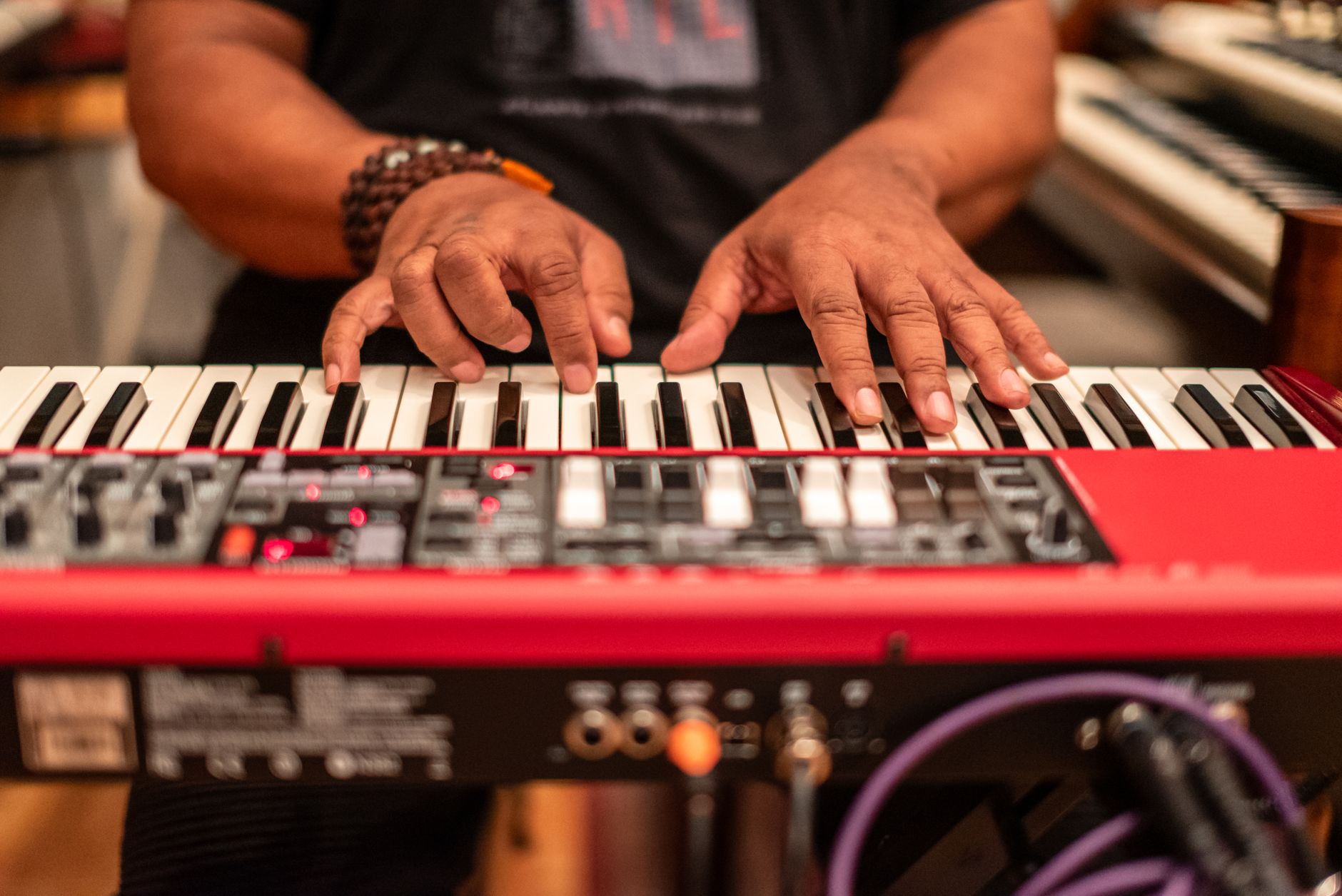
Stevie Wonder's catalog spans five decades of hits that fuse soul, funk, R&B, pop and jazz into songs that feel effortless but are built on meticulous craft. We ranked his 10 best songs by the songwriting mechanics that make them work: hook strength, singability, lyric precision, structural contrast and lasting impact.
Each song earns a SONIQ Hit Craft Score out of 50, judged on five criteria that separate memorable songs from forgettable ones. If you're looking for tools to sharpen your own lyric writing, try the free AI lyrics generator to experiment with hooks and structure.
SONIQ Hit Craft Score (0–50)
- Hook (1–10): How fast and how hard the hook lands
- Singability (1–10): Can a crowd sing it back after one listen
- Lyric Craft (1–10): Specific images, title placement, prosody
- Structure & Contrast (1–10): Verse-to-chorus lift, a bridge or turn that earns the last chorus
- Staying Power (1–10): Still played, covered and sung years later
10. For Once in My Life — Stevie Wonder
Hit Craft Score: 41/50 (Hook 8 · Singability 9 · Lyric Craft 7 · Structure 8 · Staying Power 9)
The title arrives in the first line, setting up a simple premise: finding love after a lifetime of loneliness. The melody climbs in stepwise motion, making it easy for anyone to sing along. The chorus uses repetition without redundancy, each "for once in my life" anchored by a different payoff line. The horn arrangement adds punctuation without cluttering the vocal melody.
Songwriter takeaway: Place your title early and repeat it with fresh context each time. A strong hook doesn't need complexity; it needs clarity and a melody people can predict after one pass.
9. Higher Ground — Stevie Wonder
Hit Craft Score: 42/50 (Hook 9 · Singability 7 · Lyric Craft 8 · Structure 8 · Staying Power 10)
The synth riff is the hook, hitting in the first two seconds and never letting up. The verses use short, punchy phrases that lock into the groove, and the title functions as both a spiritual metaphor and a rhythmic anchor. The song's structure is minimal—verse, chorus, repeat—but the relentless energy and lyrical urgency create contrast without a bridge.
Songwriter takeaway: A strong instrumental riff can carry the hook if your vocal melody and lyrics serve the groove. Prosody matters: the syllable count and stress patterns in "I'm so darn glad he let me try it again" fit the rhythm like a drum part. Learn more about prosody in songwriting to match your words to the music.
8. Living for the City — Stevie Wonder
Hit Craft Score: 43/50 (Hook 8 · Singability 7 · Lyric Craft 9 · Structure 9 · Staying Power 10)
This seven-minute narrative song tells a complete story: a young man moves from Mississippi to New York, gets arrested, and ends up in prison. The verses use concrete details—"her brother's smart, he's got more sense than many"—that paint character without exposition. The instrumental break includes a spoken-word vignette that shifts the song from observational to experiential. The chorus is simple, but the verses do the heavy lifting.
Songwriter takeaway: Specificity beats abstraction. Name the place, describe the character, show the stakes. If you're building a narrative, earn your chorus by making the verses matter.
7. I Wish — Stevie Wonder
Hit Craft Score: 44/50 (Hook 9 · Singability 8 · Lyric Craft 9 · Structure 8 · Staying Power 10)
The opening bass line and drum groove are instantly recognizable. The verses use nostalgic details—"nappy headed boy," "used to go to school," "brother says he's tellin'"—that feel personal and universal at once. The title lands in the pre-chorus, creating a lift before the chorus payoff. The melody is conversational, almost spoken, which makes the groove carry the singability.
Songwriter takeaway: Nostalgia works when you use sensory details people can see, hear and feel. The pre-chorus is a setup device; if you want to understand how it functions, read how long a pre-chorus should be and why placement matters.
6. Signed, Sealed, Delivered I'm Yours — Stevie Wonder
Hit Craft Score: 45/50 (Hook 10 · Singability 9 · Lyric Craft 8 · Structure 9 · Staying Power 9)
The title is a three-part hook that lands in the first ten seconds. Each section of the title—"signed, sealed, delivered"—gets its own melodic phrase, creating a call-and-response structure that begs for audience participation. The verses use conversational language, and the bridge ("I've done a lot of foolish things") shifts perspective before snapping back to the hook.
Songwriter takeaway: A three-part title can create built-in contrast and momentum. Make each phrase distinct but connected. The bridge doesn't need to be long; it just needs to reset the energy before the final chorus.
5. You Are the Sunshine of My Life — Stevie Wonder
Hit Craft Score: 45/50 (Hook 9 · Singability 10 · Lyric Craft 8 · Structure 9 · Staying Power 9)
The title is a metaphor that everyone understands, delivered in a melody so smooth it feels inevitable. The song opens with the chorus, sung by two guest vocalists, before Stevie enters on the verse. This reversal of structure—chorus first—creates familiarity before the story begins. The melody uses stepwise motion and small intervals, making it accessible to any voice.
Songwriter takeaway: Starting with the chorus can work if your hook is strong enough to carry the intro. Metaphors don't need to be clever; they need to be clear. For more on using metaphors effectively, see how to use metaphors in songwriting.
4. Sir Duke — Stevie Wonder
Hit Craft Score: 46/50 (Hook 10 · Singability 9 · Lyric Craft 8 · Structure 9 · Staying Power 10)
The horn line is the hook, and it arrives in the first bar. The verses name-check jazz legends—Basie, Miller, Satchmo, Ella—turning the song into a tribute and a lesson. The chorus is built on a simple premise: "You can feel it all over." The bridge modulates and shifts rhythm, creating a lift that makes the final chorus feel earned.
Songwriter takeaway: Name real people, places or things to anchor your song in something tangible. A modulation in the bridge can reset listener attention and give the last chorus new energy.
3. Isn't She Lovely — Stevie Wonder
Hit Craft Score: 46/50 (Hook 9 · Singability 10 · Lyric Craft 9 · Structure 8 · Staying Power 10)
Written for his newborn daughter, the song uses direct, unadorned language: "Isn't she lovely, isn't she wonderful." The melody is conversational, almost sung-spoken, which makes it feel intimate. The harmonica solo and the sound of a baby cooing in the background add texture without overwhelming the vocal. The structure is loose—verse, chorus, harmonica, repeat—but the emotional clarity holds it together.
Songwriter takeaway: Write to a real person. The specificity of the occasion—birth, weight, "made from love"—gives the song authenticity that a generic love song can't match. Emotional honesty beats technical complexity.
2. Superstition — Stevie Wonder
Hit Craft Score: 48/50 (Hook 10 · Singability 9 · Lyric Craft 9 · Structure 10 · Staying Power 10)
The clavinet riff is one of the most recognizable hooks in popular music, landing in the first second and repeating throughout. The verses use short, rhythmic phrases—"very superstitious, writing's on the wall"—that lock into the groove. The chorus shifts to a different rhythmic pattern, creating contrast without breaking the pocket. The bridge modulates and strips down to just bass and drums before building back to the final chorus.
Songwriter takeaway: A riff can be the hook if it's strong enough. Rhythmic contrast between verse and chorus creates lift without changing tempo. The bridge should reset energy, not just fill space.
1. I Just Called to Say I Love You — Stevie Wonder
Hit Craft Score: 49/50 (Hook 10 · Singability 10 · Lyric Craft 9 · Structure 10 · Staying Power 10)
The title is the entire premise, delivered in a melody so simple a child can sing it. The verses list mundane holidays and events—"no New Year's Day," "no chocolate covered candy hearts"—to set up the payoff: this call isn't tied to any occasion. The chorus repeats the title three times, each with a different melodic contour, creating variation within repetition. The structure is verse-chorus-verse-chorus-bridge-chorus, textbook but executed with precision.
Songwriter takeaway: Simplicity is not laziness. The craft here is in the negative space: what the song doesn't say is as important as what it does. The title placement, the melodic arc, the lyric setup—all serve the hook. If you want to understand how to build a chorus people remember, read how to write a viral chorus.
What These Songs Teach Songwriters
Stevie Wonder's catalog shows that craft and soul are not opposites. Every song on this list uses clear structure, strong hooks, and specific language. The melodies are singable. The titles land early and repeat with purpose. The bridges create contrast without disrupting momentum. These aren't accidents—they're decisions.
If you're working on your own songs, study how these tracks balance repetition and variation, how they use metaphor without obscurity, and how they make every section earn its place. The best songs feel effortless because the craft is invisible.
Frequently Asked Questions
What makes a Stevie Wonder song recognizable?
Instant hooks—usually a riff, bass line or vocal melody that lands in the first few seconds. His songs also use conversational language and melodies built on small intervals, making them easy to sing. The production is dense but the vocal melody stays clear.
Did Stevie Wonder write all his own songs?
Stevie Wonder wrote or co-wrote many of his most well-known songs, often contributing to arrangement and production. His creative involvement in his music was extensive throughout his career.
How can I apply Stevie Wonder's songwriting techniques?
Start with a strong, simple hook. Use specific images and real details instead of vague abstractions. Build contrast between verse and chorus through rhythm, melody or harmonic movement. Repeat your title enough that it sticks, but vary the context each time. Make every section earn its place.
Try these techniques in your own writing at mysoniq.com/app.
Related reading
- The 10 Best Prince Songs, Ranked by Songwriting Craft
- The 15 Best Song Hooks of All Time, Ranked
- The 15 Best Breakup Songs of All Time, Ranked
Photo by Dominik Gryzbon on Pexels