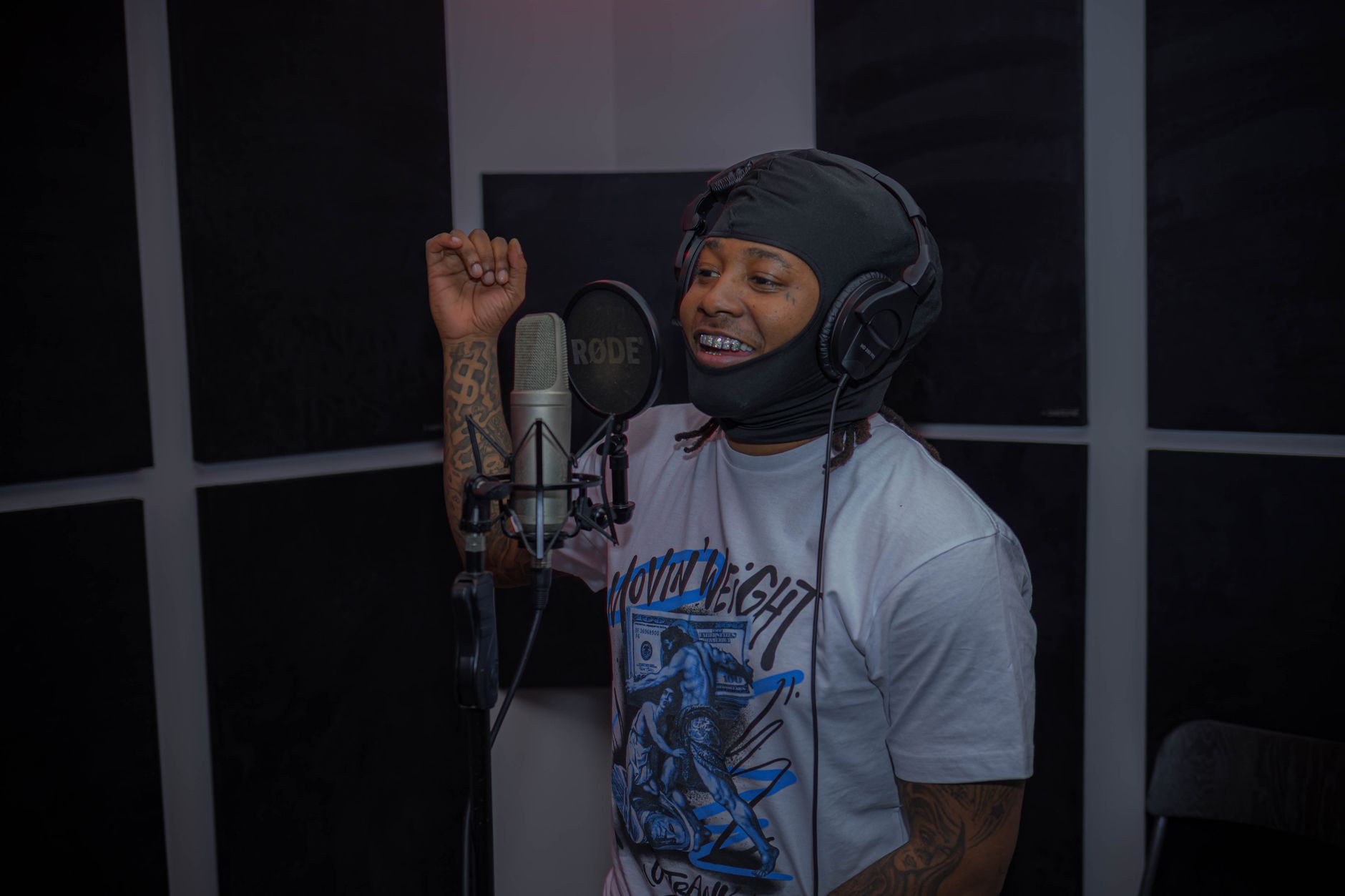
Why Drill Lyrics Hit Different
Drill rap isn't just darker subject matter over heavy 808s. The writing technique is fundamentally different from other rap subgenres. Where trap often rides the snare, drill lives in the space between the 808 slides. Where boom-bap emphasizes on-beat punchlines, drill uses back phrasing and delayed syllable placement to create tension.
The production defines the pocket. Sliding 808 basslines—notes that glide from one pitch to another—create rhythmic gaps that your lyrics need to navigate differently. If you write drill bars the same way you'd write over a standard trap beat, they'll sound stiff and off-rhythm when the 808 slides hit.
A Free Rap Lyrics Generator can help you draft initial ideas, but understanding the specific techniques makes the difference between generic bars and lines that actually fit the drill pocket.
The 808 Slide Pocket: Timing Your Syllables
Drill 808s slide between notes, usually from a root note down to a lower pitch or up to create tension. These slides occupy rhythmic space. Your syllables need to work around them, not through them.
Standard trap timing: "I pull up in the whip, they know it's me"—syllables land squarely on kick and snare hits.
Drill timing: "Pull up, they know—it's me in this"—the phrase breaks and breathes around the 808 slide, creating empty pockets where the bass movement does the work.
Practical technique: Write your bars, then remove 20% of the syllables. Drill benefits from space. Where you'd normally use a full phrase, cut it shorter and let the 808 fill the gap. The production is half the lyric.
Listen to how drill flows are structured. Syllables cluster in bursts, then pause. The pause isn't dead air—it's where the 808 slide creates movement. Your job is to set up that moment, not fill it.
Back Phrasing: Delay and Tension
Back phrasing means placing your syllables slightly behind the beat—landing after the expected rhythmic moment. This creates a laid-back, menacing feel that defines drill's vocal tone.
Most rap flows anticipate the beat or land directly on it. Drill intentionally drags behind, building tension between the vocal and the instrumental. The listener expects the syllable on the snare; you deliver it a sixteenth note late.
How to practice back phrasing:
- Record yourself rapping on-beat first
- Re-record the same bars, consciously delaying each phrase by a fraction
- Compare the two—the second version should feel heavier, more threatening
- Adjust until the delay feels natural, not forced or sloppy
Back phrasing works best on the first syllable of a phrase. If your bar starts "Opps in the rear," delay "Opps" so it lands just after the kick drum. The rest of the phrase can return closer to the beat, but that initial delay sets the tone.
This technique pairs with drill's slower perceived tempo. The tempo gives you more room to play with syllable placement without sounding off-rhythm.
Cold Punchlines: Structure and Delivery
Drill punchlines aren't comedic or clever for the sake of wordplay. They're blunt, visual, and threatening. The impact comes from directness and imagery, not from multi-syllabic rhyme schemes.
Weak drill punchline: "I'm sharper than a tack, attack, no coming back"—too many syllables, sounds like standard rap.
Strong drill punchline: "Headshot, no talks"—four syllables, complete image, space for the 808 to hit after.
Structure your punchlines in two parts: setup and impact. The setup creates the scenario (1-2 bars), the impact delivers the consequence (1 short phrase). Then silence. Let it breathe.
Example structure:
- Bar 1: "They was talking on the net" (setup)
- Bar 2: "Now they ghosts" (impact, then 2 beats of space)
The space after the punchline is mandatory. If you immediately follow with another bar, you kill the impact. Drill production is minimal—use that minimalism in your writing. One cold line, then let the beat work.
Avoid extended metaphors. Drill favors literal, street-level imagery. If you need two bars to explain your punchline, it's not a drill punchline. Cut it to one phrase that needs no explanation.
Rhyme Schemes for Drill: Less Is More
Complex multisyllabic rhyme schemes work against drill's aesthetic. The genre prioritizes rhythm and space over technical rhyming. Your rhymes should be simple, allowing the flow and pocket to do the heavy lifting.
Effective drill rhyme patterns:
- Single-syllable end rhymes: "block/Glock," "slide/ride"
- Assonance over perfect rhymes: "smoke/go," "move/through"
- No rhyme at all for 2-3 bars, then one hard rhyme for emphasis
The goal isn't to showcase lyrical dexterity. It's to match the cold, mechanical feel of the production. Overwritten bars sound out of place over sliding 808s and minimal hi-hats.
If you're used to writing dense rhyme schemes, this feels counterintuitive. You'll think your bars sound too simple. That's the point. Drill's power comes from restraint. Say less, mean more.
For more on balancing technical skill with genre constraints, see how to write clean rap lyrics without losing edge—the principle of maintaining impact while working within limitations applies here.
Using a Generator as a Starting Point
Generators help you draft ideas quickly, especially when you're stuck on a concept or need fresh angles on common drill themes. The output won't be ready to record as-is, but it gives you raw material to refine using the techniques above.
How to use generator output effectively:
- Generate 3-4 different versions of your concept
- Pull the strongest individual lines from each version
- Rewrite those lines to fit the 808 pocket—remove syllables, add space
- Apply back phrasing to the first syllable of each bar
- Cut any line that requires more than 2 bars to complete
The generator gives you vocabulary and ideas. You provide the drill-specific structure and timing. Think of it as a brainstorming partner, not a finished product.
If you're working with AI music platforms, understanding how to structure prompts matters. Check out how to use Suno AI lyrics generator for prompt techniques that get better initial output, reducing the amount of rewriting you need to do.
Common Mistakes That Kill Drill Bars
Too many syllables per bar. Drill needs space. If your bars are packed wall-to-wall with words, they won't fit the pocket. Cut 20-30% of your syllables on the first edit.
Rhyming every bar. You don't need to. Drill's rhythmic emphasis means you can go 4 bars with minimal rhyming if the flow and imagery are strong. Force-fitting rhymes makes your bars sound like generic rap.
Explaining the punchline. If your bar needs a second bar to clarify what you meant, rewrite it. Drill punchlines should be immediate and visual. "Headshot" doesn't need explanation.
Ignoring the 808 pattern. Write to a reference track or the actual beat you're using. The 808 slide pattern dictates where your syllables can land. Writing without the beat means you're guessing at the pocket.
Overusing ad-libs. Drill uses ad-libs sparingly—usually one-word reactions ("Boom," "Grrah") placed in the space after a punchline. Filling every gap with ad-libs clutters the mix and kills the minimalist aesthetic.
FAQ
Can I write drill lyrics without knowing music production?
Yes, but you need to write to a reference beat. The 808 slide pattern and BPM define the pocket. Write your bars while looping a drill instrumental—free type beats work fine for practice. Your syllable placement has to match the production's rhythm, so writing in silence won't work for this genre.
How many bars should a drill verse be?
Drill verses tend to be shorter than standard rap verses because the production is minimal and repetitive. Going too long risks losing the track's energy. Focus on 2-3 strong images or punchlines per verse rather than trying to fill time. Quality over quantity—always.
Do drill lyrics have to be about violence?
No. The sound and techniques work with any subject matter. The 808 slide pocket, back phrasing, and minimal rhyme schemes are structural choices, not content requirements. You can apply these techniques to non-violent themes and still sound like drill. The writing style is separate from the subject matter, though the genre's origins influence common themes.
Try the full platform at mysoniq.com/app to build complete drill tracks with custom lyrics and production prompts.
Related reading
- Freestyle Rap Lyrics Generator: Write Bars on Demand
- Rap Lyrics Generator: Write Bars, Then Make Them Yours
- Country Song Lyrics Generator: How to Write Authentic Hits
Photo by Adeemproduction on Pexels