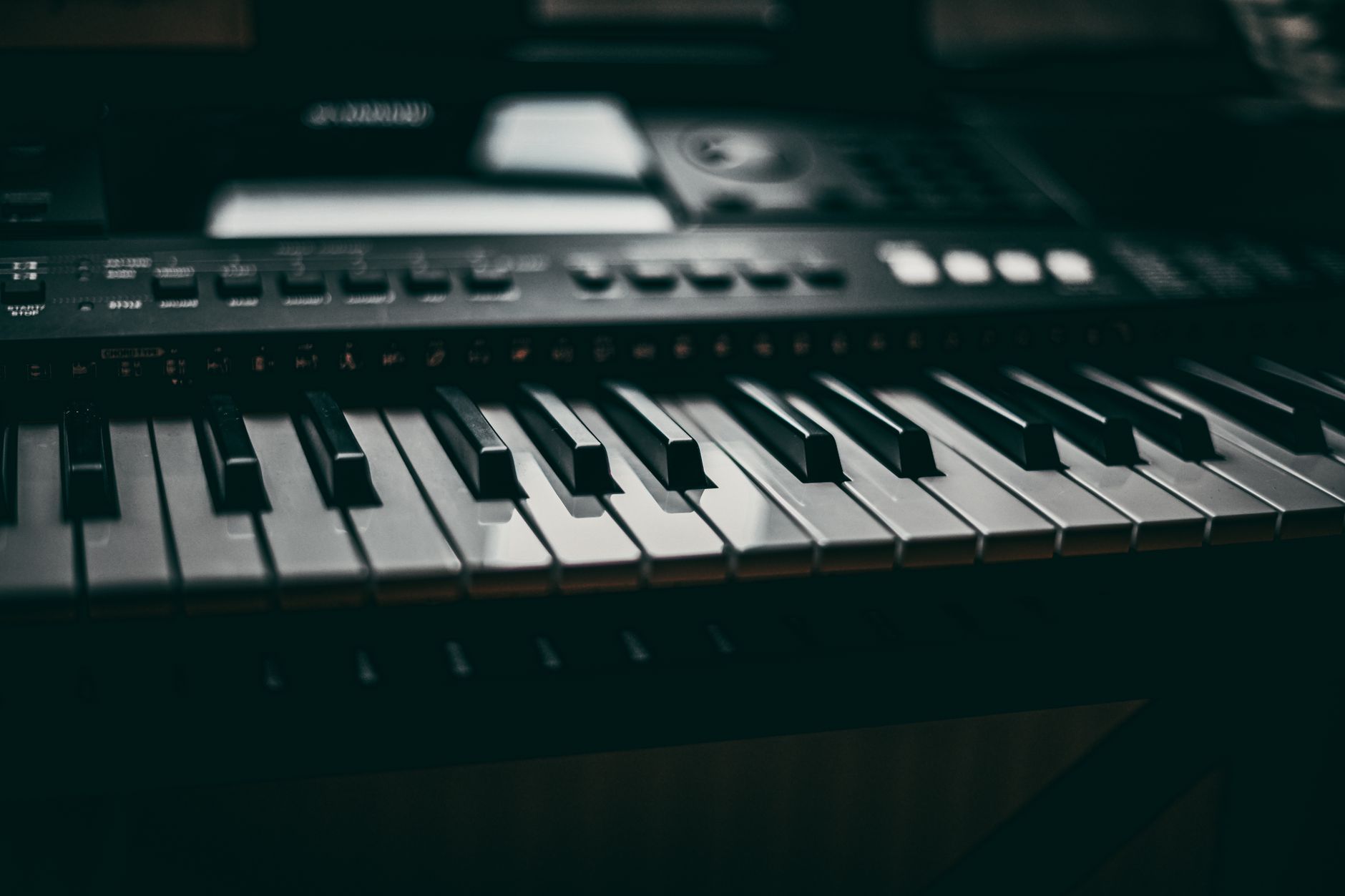
Halloween songs occupy a specific niche: they need to feel spooky without being genuinely frightening, catchy enough to stick after one listen, and campy enough to invite repeated plays every October. Whether you're writing for a school performance, a YouTube release, or just seasonal fun, the formula is consistent.
This guide breaks down the musical choices, lyrical techniques, and production elements that make Halloween songs work. No theory fluff—just the decisions that separate "Thriller" from forgettable seasonal filler.
Start with Minor Keys and Chromatic Movement
Minor keys create the foundation for spooky music. A minor (Am), E minor (Em), and D minor (Dm) are the most common choices because they're easy to play and instantly recognizable as "dark." The natural minor scale gives you that haunting quality without needing complex theory.
Chromatic movement—notes that move by half-steps—adds tension. Instead of jumping from C to E, slide from C to C# to D. This creates the "creeping" feeling that defines horror soundtracks. Use it in your bass line or melody during verses.
The tritone interval (also called the "devil's interval") is your secret weapon. It's the distance between C and F# or E and Bb. Medieval composers avoided it because it sounded "evil." You want that. Drop a tritone into your chorus hook or use it to transition between sections.
If you're new to song structure basics, this beginner's guide covers the fundamentals before you add seasonal elements.
Write Hooks That Balance Spooky and Catchy
Halloween song hooks need to be singable while maintaining atmosphere. "Monster Mash" works because the hook is simple ("I did the mash / I did the monster mash") but the backing vocals add the spooky layer. Your hook should be something a ten-year-old can remember, with production doing the heavy lifting.
Use repetition aggressively. Repeat your hook phrase three times before varying it. "Thriller, thriller night" repeats the word four times in eight syllables. That's intentional. Repetition creates familiarity, which is essential when you're competing with decades of established Halloween classics.
Rhyme schemes should be simple: AABB or ABAB. Complex internal rhymes distract from the atmosphere you're building. Save the wordplay for other genres.
If you need a starting point, a free AI lyrics generator can give you hook variations to build from. Generate ten options, pick the one that feels most singable, then refine.
For more on hook construction across genres, check out this breakdown of working formulas.
Choose Between Campy Fun and Atmospheric Dread
You have two lanes: campy novelty or atmospheric mood piece. "Monster Mash" is pure camp. "Somebody's Watching Me" leans atmospheric. Both work, but mixing them creates confusion.
Campy songs use:
- Direct references to Halloween imagery (witches, ghosts, graveyards)
- Playful language and puns
- Upbeat tempos (120-140 BPM)
- Major key moments in the chorus for contrast
- Sound effects (creaking doors, howling wind, cackling)
Atmospheric songs use:
- Implied threat rather than explicit monsters
- Slower tempos (80-100 BPM)
- Sustained minor key throughout
- Reverb-heavy production
- Lyrics focused on feeling rather than narrative
Pick your lane in the first 30 seconds. If you open with a wolf howl and a bouncing piano riff, you've committed to camp. If you open with a distant drone and whispered vocals, you're atmospheric.
Need topic inspiration? This list of 31 Halloween song ideas includes first lines for both approaches.
Structure Your Song for Maximum Impact
Halloween songs typically use verse-chorus-verse-chorus-bridge-chorus structure. The bridge is where you escalate—add a key change, introduce a new sound effect, or switch from minor to major for contrast before dropping back into the final chorus.
Keep verses short. Two 8-bar verses are enough. Halloween songs succeed on their chorus and production, not lyrical depth. Your verse exists to set up the hook.
Intro and outro matter more than in other genres. Your intro establishes atmosphere—use 4-8 bars of instrumental with signature sounds (music box melody, thunderstorm, organ). Your outro should fade with those same elements, creating a loop effect that makes the song feel like it could play forever.
Pre-chorus optional but effective. Use it to build tension before the hook drops. Four bars of ascending melody or increasing tempo works.
Production Techniques That Sell the Spooky
Sound selection matters more than playing ability. A simple melody on a church organ sounds spookier than complex piano runs. Prioritize:
- Pipe organ or harpsichord for melodic elements
- Theremin or synth pads for atmospheric layers
- Pizzicato strings for rhythmic stabs
- Low brass or synth bass for ominous low end
- Music box for unsettling contrast
Reverb is essential. Use long decay times (2-4 seconds) on vocals and lead instruments to create space and distance. Everything should sound like it's happening in a large, empty room.
Layer in sound effects sparingly. One well-placed wolf howl is effective. Twelve competing sound effects is noise. Use effects as punctuation, not wallpaper.
Vocal effects: slight pitch-shifting down (5-10 cents) makes vocals sound unnatural without being obviously processed. Add a doubler effect for thickness. Consider a whispered vocal track underneath your main vocal for texture.
Lyrics: Concrete Images Over Abstract Feelings
Halloween lyrics work when they're visual. "Shadows creeping up the wall" is stronger than "feeling scared tonight." Give listeners something to picture.
Use sensory details beyond sight: "the smell of rotting leaves," "cold breath on your neck," "the creak of floorboards." Multi-sensory lyrics create immersion.
Avoid clichés unless you're subverting them. "Things that go bump in the night" is tired. "Things that scratch beneath the floor" is fresher. Take the expected image and twist it slightly.
Rhyme dictionary is your friend for Halloween vocabulary. You need rhymes for: night, fright, sight, bite / dead, dread, bled, bed / scream, dream, seem, beam / ghost, most, host, coast.
Keep syllable counts consistent across verses. If your first verse line has 8 syllables, your second verse's corresponding line should too. This maintains the singable quality essential for seasonal songs.
FAQ
What tempo works best for Halloween songs?
Campy Halloween songs typically sit between 120-140 BPM for energy and danceability. Atmospheric Halloween songs work better at 80-100 BPM to create tension and dread. Match your tempo to your chosen lane—upbeat for fun, slower for mood.
Do I need to use real instruments or can I use software?
Software instruments work fine for Halloween songs. The key is sound selection, not authenticity. A good pipe organ VST is more effective than a poorly recorded real piano. Focus on choosing sounds that immediately communicate "spooky" rather than worrying about organic vs. synthetic.
How long should a Halloween song be?
Target 2:30 to 3:30. Halloween songs are typically played at parties, in classrooms, or as part of playlists. Shorter songs get replayed more often. If you're over four minutes, you're losing attention during the season when people want quick, repeatable hits.
Once you've written your Halloween song, try SONIQ to generate variations or refine your lyrics with AI assistance.
Related reading
- 31 Halloween Song Ideas: Spooky Topics & First Lines
- How to Write a Hip-Hop Song: Structure, Hooks and the Moves That Work
- How to Write a Singer-Songwriter Song: Structure, Hooks and the Moves That Work
Photo by Saeed Khokhar on Pexels