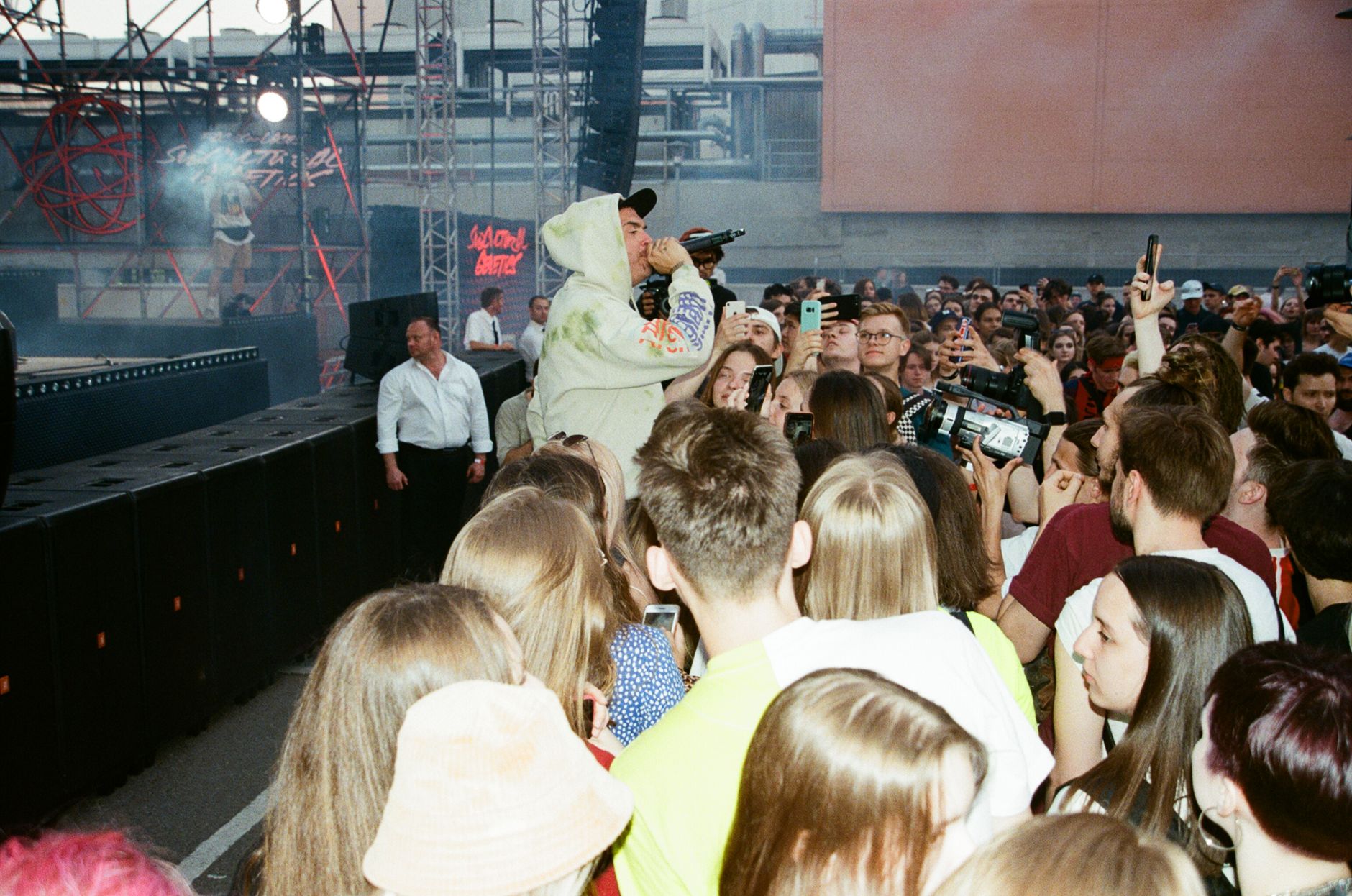
Every rapper hits a wall mid-freestyle. Your brain goes blank, the beat keeps rolling, and you need words—fast. The difference between choking and keeping the crowd engaged isn't talent; it's having a mental list of reliable fallbacks that buy you time and keep the energy up.
These eleven topics and techniques work because they require zero preparation, fit any beat, and give your brain a second to catch up. If you're building your lyric arsenal beyond freestyles, a free rap lyrics generator can help you explore different angles and wordplay patterns faster than writing from scratch.
1. Describe What's Happening Right Now
The easiest freestyle content is the room you're in. Talk about the crowd, the beat, the venue, your opponent, or the weather outside. It's concrete, it's immediate, and it proves you're present instead of reciting pre-writtens.
Example: "Everybody in the back with their hands up high / Beat knocking hard, feel the bass in your thighs / Lights flashing red, yeah, the vibe's insane / I'm just getting started, let me run this train."
2. Flip Your Opponent's Last Line
In a battle, grab a word or phrase your opponent just used and twist it back at them. It shows you're listening, creates instant contrast, and the crowd loves the callback. Works in cyphers too—just reference the previous rapper's topic.
Example: If they said "I'm the king of this block," you counter with "King? You're a jester in hand-me-down socks / I'm the landlord, you just rent out the box."
3. Name-Drop Your Hometown or Block
Geographic pride is freestyle gold. Shout out your city, neighborhood, street, or any landmark people recognize. It's personal, it roots you in a real place, and locals in the crowd will react. You can stretch this for four to eight bars easily.
Example: "Straight outta Brooklyn where the hustle don't sleep / Concrete jungle, every corner runs deep / From Flatbush to Bed-Stuy, we grind every day / You ain't from my city, you don't move the same way."
4. Use Self-Hype and Braggadocio
When in doubt, talk about how good you are. It's the backbone of hip-hop. Claim you're the best, the hardest working, the most creative, the hungriest. Stack superlatives and exaggerate—it fills space and pumps energy into the room.
Example: "I'm the coldest to ever pick up a pen / Been killing beats since I don't know when / They study my flow like a college degree / You're looking at greatness, yeah, that's me."
5. Talk About the Grind or Your Come-Up
Everyone respects the hustle. Reference late nights in the studio, writing bars on the bus, grinding with no budget, or the journey from nothing to now. It's relatable, it's authentic, and it gives you narrative momentum when your brain needs a second.
Example: "Started in my bedroom with a broken mic / No budget, no co-sign, just me and the night / Wrote a hundred songs that nobody heard / Now I'm on this stage spitting every word."
6. Drop a Punchline Setup
Punchlines are two-part structures: setup and payoff. When you blank, throw out a setup phrase and let your instinct finish it. Common setups: "I'm so [adjective] that…" or "You're like [comparison]…" The rhythm of the structure pulls the punchline out of you. For more on crafting wordplay, check out these rap wordplay examples.
Example: "I'm so sharp I could cut through steel / You're so soft you apologize for how you feel."
7. Reference Pop Culture or Current Events
Movies, sports, memes, politics, viral moments—anything people know gives you instant content. You don't need a deep take; just name it and tie it to your point. The recognition from the crowd buys you goodwill and time to think of your next angle.
Example: "I'm moving like LeBron in the paint, no fear / You're benched on the sideline, disappear / Trending topic, I'm the headline today / You're yesterday's news getting swept away."
8. Use Filler Phrases and Ad-Libs
Strategic repetition keeps the flow alive. Phrases like "yeah," "uh-huh," "let me tell you," "listen," or "check it" give you a half-bar to think. Ad-libs ("woo," "ayy," "uh") fill dead air. They're not lyrical genius, but they prevent awkward silence and keep your rhythm pocket tight.
Example: "Yeah, uh, let me break it down, check it / I came to collect, no disrespect, I wreck it / Uh-huh, you know the name, I rep it."
9. Attack the Beat or Producer
Comment on the beat itself—the drums, the sample, the tempo, the energy. Compliment it, critique it, or describe how it makes you feel. Producers love the recognition, and it's an easy two to four bars that sound thoughtful without requiring complex wordplay.
Example: "This beat knocking harder than a landlord's fist / Snare cracking clean, can't resist / 808s rumble, got me in the zone / I ride this rhythm like I own the throne."
10. Recycle a Memorized Rhyme Scheme
Keep three or four flexible rhyme schemes in your back pocket—word chains that rhyme but don't commit to a specific topic. When you blank, drop one in and build meaning around it. Examples: "flow/go/show/know," "fire/higher/wire/liar," "stack/back/track/fact." Understanding different types of rap flows helps you adapt these schemes to any beat.
Example: "I elevate higher while you stuck in the mire / I'm the live wire, you're the expired flyer / Set the booth on fire, I'm the one they require / You a ghost in the choir, I'm the whole empire."
11. End With a Call-and-Response or Crowd Interaction
When you're truly stuck, hand the mic to the crowd. Ask a question, prompt a chant, or set up a call-and-response. It shifts focus, gives you a mental reset, and makes the freestyle feel participatory. Then you jump back in with fresh energy.
Example: "Everybody say 'yeah!' (Yeah!) / Say 'ho!' (Ho!) / Now watch me take it to another level, here we go…"
Putting It All Together
Freestyling isn't about never blanking—it's about having enough tools to recover instantly. Memorize two or three of these fallbacks, practice them over random beats, and they'll become reflex. The more you freestyle, the faster your brain connects dots between these topics and the moment you're in.
No one expects every line to be brilliant. They expect you to keep going. These eleven techniques do exactly that.
Frequently Asked Questions
Can you actually freestyle off the top, or is it all pre-written?
Real freestyles mix both. Pure off-the-top exists, but most experienced freestylers have memorized phrases, rhyme schemes, and topic templates they remix in real time. The skill is making recycled pieces sound spontaneous and relevant to the moment.
How do I practice freestyling when I'm alone?
Freestyle over random YouTube beats for five minutes daily. Record yourself, listen back, and note where you blanked. Then drill those weak spots—practice describing objects around you, flipping common phrases, or building punchlines until the patterns become automatic.
What's the difference between a freestyle and a written verse?
A written verse is polished, structured, and revised. A freestyle prioritizes flow, energy, and real-time creativity over perfect wordplay. Freestyles are looser, more repetitive, and judged on delivery and presence as much as lyrics. Both skills feed each other, but they're not the same muscle.
If you want to build your lyric toolkit beyond freestyles, try SONIQ's songwriting tools to explore new angles and rhyme patterns faster.