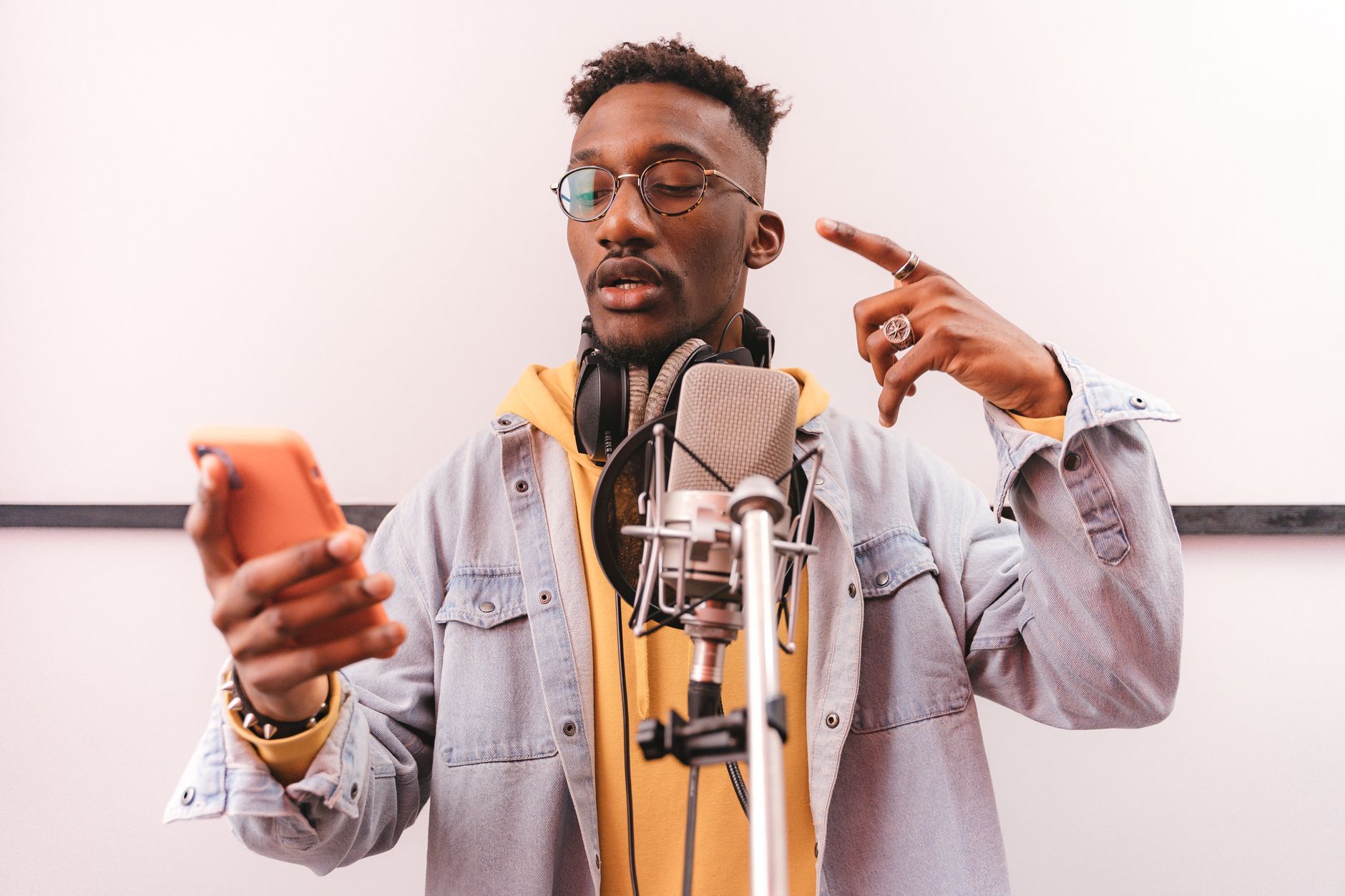
Flow is the difference between bars that hit and bars that miss. It's not just what you say—it's how your syllables land on the beat, how you control rhythm, and how you manipulate space. These nine exercises will build your flow mechanics from the ground up, whether you're writing in your room or freestyling in the booth.
Most rappers practice by rapping full verses over and over. That's like trying to build muscle by only doing full workouts—you need isolation exercises. The drills below target specific flow skills: pocket, syllable placement, breath control, rhythm variation, and timing. Use a free rap lyrics generator to create practice material if you need fresh bars to work with.
1. Metronome Syllable Drops
Set a metronome to 80 BPM. Rap one syllable on every click for eight bars, then shift to every other click (half-time), then every half-click (double-time). This isolates your ability to land syllables exactly where you intend. Most flow problems come from sloppy syllable placement—this drill fixes that.
Example: On the click: "I / WILL / NOT / MISS / THE / BEAT / A / GAIN." Off the click: "I will / not miss / the beat / again." Double: "I-will-not-miss-the-beat-a-gain-I-swear-I'll-never-slip."
2. Breath Pattern Mapping
Write a 16-bar verse and mark every breath with a slash. Rap it three times: first with breaths only where marked, second with breaths removed (forcing longer phrases), third with extra breaths added mid-phrase. This teaches you to control phrase length and builds lung capacity. Breath placement changes flow feel entirely—short breaths create urgency, long phrases create momentum.
Example: "I'm back in the lab / cooking up heat / no sleep / just beats" becomes "I'm back in the lab cooking up heat no sleep just beats" (one breath) or "I'm / back in the lab / cooking / up heat / no / sleep / just beats" (choppy, staccato).
3. Pocket Riding (Behind, On, Ahead)
Pick an instrumental. Rap the same four bars three ways: slightly behind the beat (laid-back), directly on it (locked), and slightly ahead (pushing). Record all three. This is pocket control—the micro-timing that separates amateurs from pros. Kendrick rides behind, Eminem locks on, and Tech N9ne pushes ahead. You need all three in your toolkit.
Example: The phrase "never gonna stop till I reach the top" lands differently when you delay "stop" by a sixteenth note versus hitting it exactly on the snare versus anticipating it just before the kick.
4. Syllable Density Ladder
Write four versions of the same bar, each with increasing syllable count. Start with 8 syllables, then 12, then 16, then 20+. Rap each version over the same four beats. This trains you to pack or stretch content without losing clarity. Density control is how you create contrast—sparse bars hit harder after dense runs.
Example: 8: "I stay on my grind every day" / 12: "I stay on my grind working every single day" / 16: "I stay on my grind I'm working every single day no play" / 20+: "I stay on my grind I'm working every single day no play just hustle and I'm never gonna fade away."
5. Rhythm Borrowing
Find a song in a completely different genre—reggaeton, jazz, funk, Afrobeat. Transcribe the rhythm of the main vocal or instrument. Now rap your own lyrics using that exact rhythm pattern over a hip-hop beat. This imports fresh rhythmic ideas into your flow vocabulary. Most rappers recycle the same three or four patterns—this breaks that habit. Check out 12 types of rap flows for more pattern ideas.
Example: Take the vocal rhythm from a salsa chorus, map it to syllables: "da-DA-da-da-DA-da," then fit your words: "I-MOVE-like-wa-TER-flow."
6. Constraint Writing
Write a verse where every line must start on beat 1 and end before beat 3. Then write another where no line can start before beat 2. Constraints force you to explore rhythmic territory you'd normally avoid. This is how you discover new flows—by making your usual approach impossible.
Example: Starting on 1, ending before 3: "Flow is tight, / bars ignite, / never bite, / I write." Starting after 2: "[silence] ...coming in late / [silence] ...sealing your fate / [silence] ...never debate."
7. A Cappella Recording
Record yourself rapping a full verse with no beat—just your voice. Listen back. Every timing issue, every rhythmic hiccup, every unclear syllable becomes obvious. Then add the beat and compare. This reveals where you're leaning on the instrumental instead of controlling your own rhythm. Real flow exists independent of the beat.
Example: If your a cappella sounds scattered or off-time, you're not internalizing the rhythm—you're reacting to it. The beat should support your flow, not create it.
8. Speed Shifting Mid-Verse
Write a 16-bar verse with three sections: bars 1-4 at 60% speed (slow, deliberate), bars 5-12 at 100% (normal), bars 13-16 at 140% (rapid). Practice the transitions until they're seamless. Speed changes create dynamics and keep listeners engaged. If you need practice material, try techniques from 15 rap wordplay examples to fill your bars with substance.
Example: Start with "I take my time, every word is a crime, perfectly placed in rhyme" (slow), shift to standard pace mid-verse, then finish with "now-I'm-picking-up-the-pace-no-space-between-the-words-I'm-serving-up-absurd-flows-you-never-heard."
9. Flow Mimicry and Mutation
Pick a verse from a rapper whose flow you admire. Transcribe the exact rhythm—not the words, just the syllable pattern and timing. Write your own lyrics that fit that rhythm perfectly. Then intentionally break one element: change the breath pattern, shift the pocket, or alter the syllable density. This teaches you to deconstruct and reconstruct flows systematically.
Example: If you're working with a triplet-heavy flow, write your version with triplets, then mutate it by replacing every third triplet with straight eighth notes. The result is a hybrid flow that's familiar but distinct.
Putting It Together
These exercises work because they isolate specific flow mechanics. You don't need to do all nine every session—pick two or three and rotate them weekly. Track your progress by recording practice sessions and comparing them month to month. Flow improvement is measurable: cleaner syllable placement, better breath control, more rhythmic variety, tighter pocket.
The goal isn't to sound like anyone else. It's to build a deep vocabulary of rhythmic options so you can express exactly what you intend, exactly how you intend it. Flow is your voice's fingerprint—these drills just make sure it's legible.
FAQ
How long does it take to improve rap flow?
You'll hear differences in 2-3 weeks of daily practice using isolation exercises. Significant improvement—where your flow becomes a strength—takes 3-6 months of consistent work. Flow is motor skill development, not knowledge acquisition. It requires repetition.
Can you practice flow without beats?
Yes, and you should. A cappella practice forces you to internalize rhythm instead of reacting to it. Use a metronome for timing reference, but practice delivering bars with no instrumental. This builds rhythmic independence.
What's the difference between flow and delivery?
Flow is rhythm and timing—how syllables land relative to the beat. Delivery is tone, energy, inflection, and emotion—how you perform those syllables. Both matter. You can have perfect flow with flat delivery, or great energy with sloppy timing. Train both separately, then combine them.
If you want to test new flows with fresh material, try SONIQ's AI songwriting tools to generate practice verses and experiment with different rhythmic approaches.
Related reading
- 11 Things to Say in a Freestyle Rap When Your Mind Goes Blank
- How to Promote Your Music: 7-Day Release Week Plan
- Anniversary Song Lyrics Generator: Write a Song for Your Partner
Photo by ANTONI SHKRABA production on Pexels