The Short Answer: Yes, But With Catch
Using AI to write a song is completely legal in the United States and most other jurisdictions. There are no laws prohibiting the use of generative tools for lyric creation, melody generation, or full-track production. You can legally use an free Rap Lyrics Generator to draft your next hit. However, legality and ownership are different concepts. While you can create the song without breaking any laws, you may not own the copyright to the parts generated entirely by the machine. This distinction is critical for commercial release and income distribution.
Copyright and Ownership: What the Law Says
Under current US Copyright Office guidelines, works produced solely by artificial intelligence are not protected by copyright. Copyright is designed to protect the expression of human authorship. If a prompt is entered into a model and the output is downloaded without significant human modification, that output is in the public domain. Anyone else could potentially use the same lyrics without legal consequence.
To secure copyright, you must demonstrate "human authorship." This means the AI should be treated as a tool, like a spell-checker or a thesaurus, rather than the author. Your contribution must be substantial. This includes:
- Curating and editing: Selecting specific lines from AI output and arranging them.
- Substantial rewriting: Changing enough of the text so that it reflects your unique creative choices.
- Structural decisions: Determining the verse-chorus-bridge structure and where the AI-generated elements fit.
- Melodic composition: If the AI writes the lyrics but you compose the melody, the melody is protected by your copyright, even if the lyrics are not.
For practical guidance on the registration process, our guide on how to copyright a song details the steps to document your human contribution properly. If you are planning to register with a performing rights organization, check our step-by-step on how to register a song with BMI to ensure your splits are accurate.
What Streaming Platforms Require
Major platforms like Spotify, Apple Music, and Amazon Music have updated their terms of service to address AI content. The primary requirement is transparency. You must declare that your music contains AI-generated components. Hiding this fact can lead to takedowns and account termination.
Most major distributors now have specific checkboxes for AI content during the upload process. If you select "Yes," the platform may treat the track differently. Some platforms are beginning to flag high-volume AI releases to prevent spam. To stay in good standing, ensure you have a genuine human creative process behind the final master. For a deeper dive into the technical and creative workflow, see our breakdown on how to write a rap song with AI, which covers the balance between tool usage and artistic intent.
Can You Tell if a Song Was Written by AI?
Detection is becoming more sophisticated, but it is not perfect. Listeners often identify AI songs by subtle tells: overly generic metaphors, perfect but sterile rhyme schemes, and a lack of specific, personal anecdotal details. However, for legal purposes, "feeling" is not evidence. If a dispute arises, the burden of proof lies on the claimant to show human authorship. This is why keeping detailed session notes, version history, and proof of your creative process is essential. You should document the prompts used, the edits made, and the final arrangement choices. This paper trail is your defense in case of an ownership challenge.
Best Practices for Secure AI Songwriting
To maximize your ownership and platform compliance, follow these best practices:
- Use AI for Ideation, Not Final Drafts: Use tools to brainstorm hooks or verse ideas, but rewrite them in your own voice.
- Layer Human Elements: Add your own melodic lines, vocal ad-libs, or production choices that are distinctly human.
- Document Everything: Keep screenshots of your workflow. Show the "before" (AI output) and "after" (your edit) states.
- Check Tool Terms: Some AI services claim ownership of the output. Read the terms of service of the specific tool you use. Ensure you have a commercial license for the output.
- Declare AI Use: Be honest with distributors. Transparency builds trust and avoids long-term legal risks.
For those looking to refine their lyrical skills without fully relying on generation, explore our article on 11 songwriting prompts for ChatGPT to see how to use large language models as creative partners rather than replacements.
Frequently Asked Questions
Is it legal to use AI to write a song?
Yes, using AI to write a song is legal. There are no statutes prohibiting the creation of music with AI tools. However, you must comply with platform terms regarding disclosure and ensure you have the commercial rights to the generated content from the specific AI service provider.
Can you copyright a song written with AI?
You can only copyright the human-authored portions of a song. If AI generated the lyrics and melody solely from a prompt, those elements are not copyrightable. You must make substantial creative contributions, such as editing, arranging, or composing a unique melody, to secure copyright protection for the final work.
Can you tell if a song was written by AI?
Not with certainty. While detection tools exist, they are not 100% accurate. Listeners may notice generic phrasing or lack of personal specificity, but this is subjective. Legally, the presence of AI content is determined by the creator's disclosure and documentation of the creative process, not by listener perception.
Is there an AI to help write songs?
Yes, there are many AI songwriting tools available. These range from simple lyric generators to full-composition engines that create melody, chords, and vocals. Tools like SONIQ generate complete song concepts—including lyrics, music theory, and production briefs—allowing you to focus on humanizing the output for better artistic control and ownership.
Ready to test your own workflow? You can explore various creative options and start building your next track at SONIQ today.
Related reading
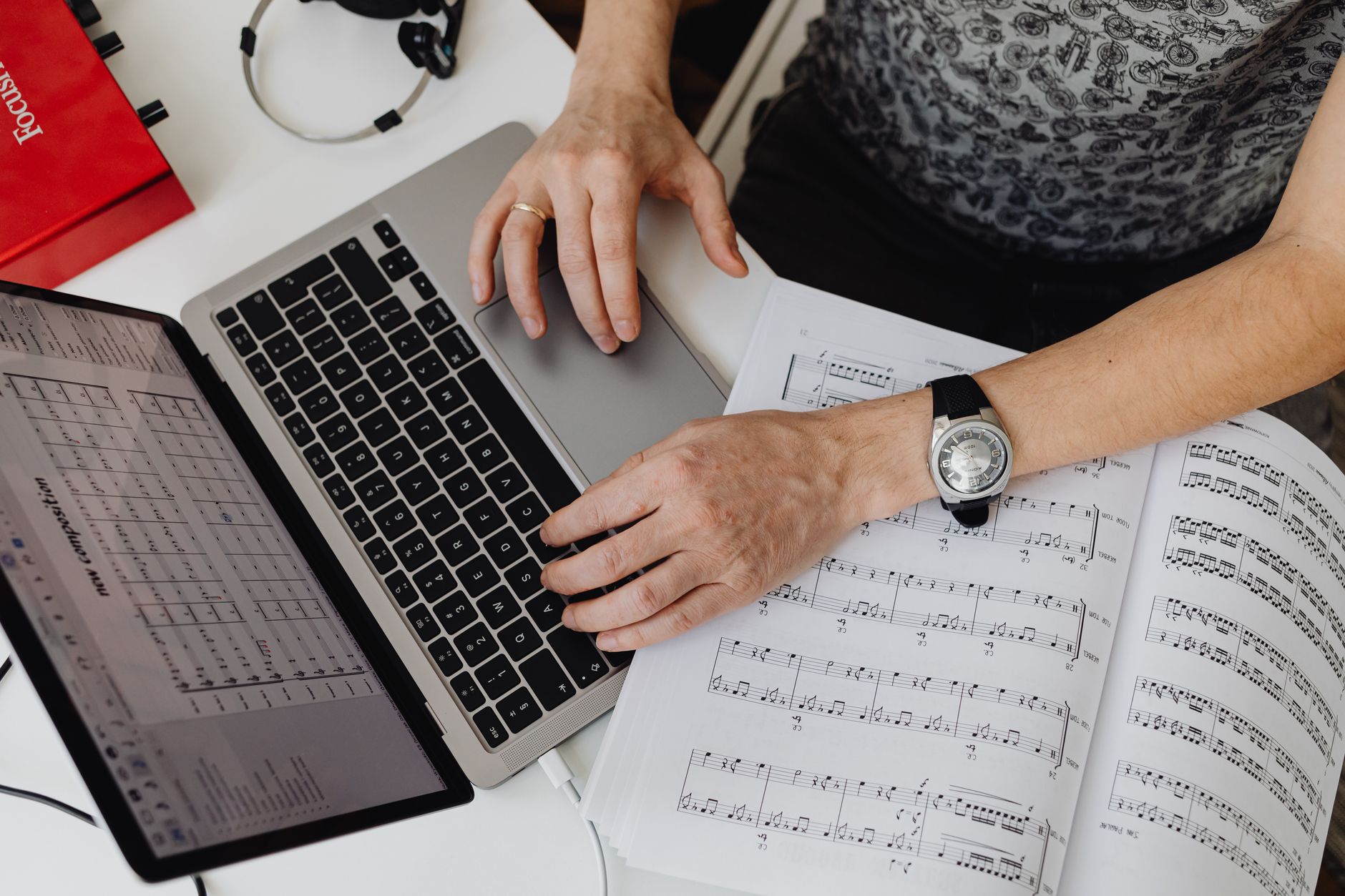
Photo by kaboompics on Pexels